
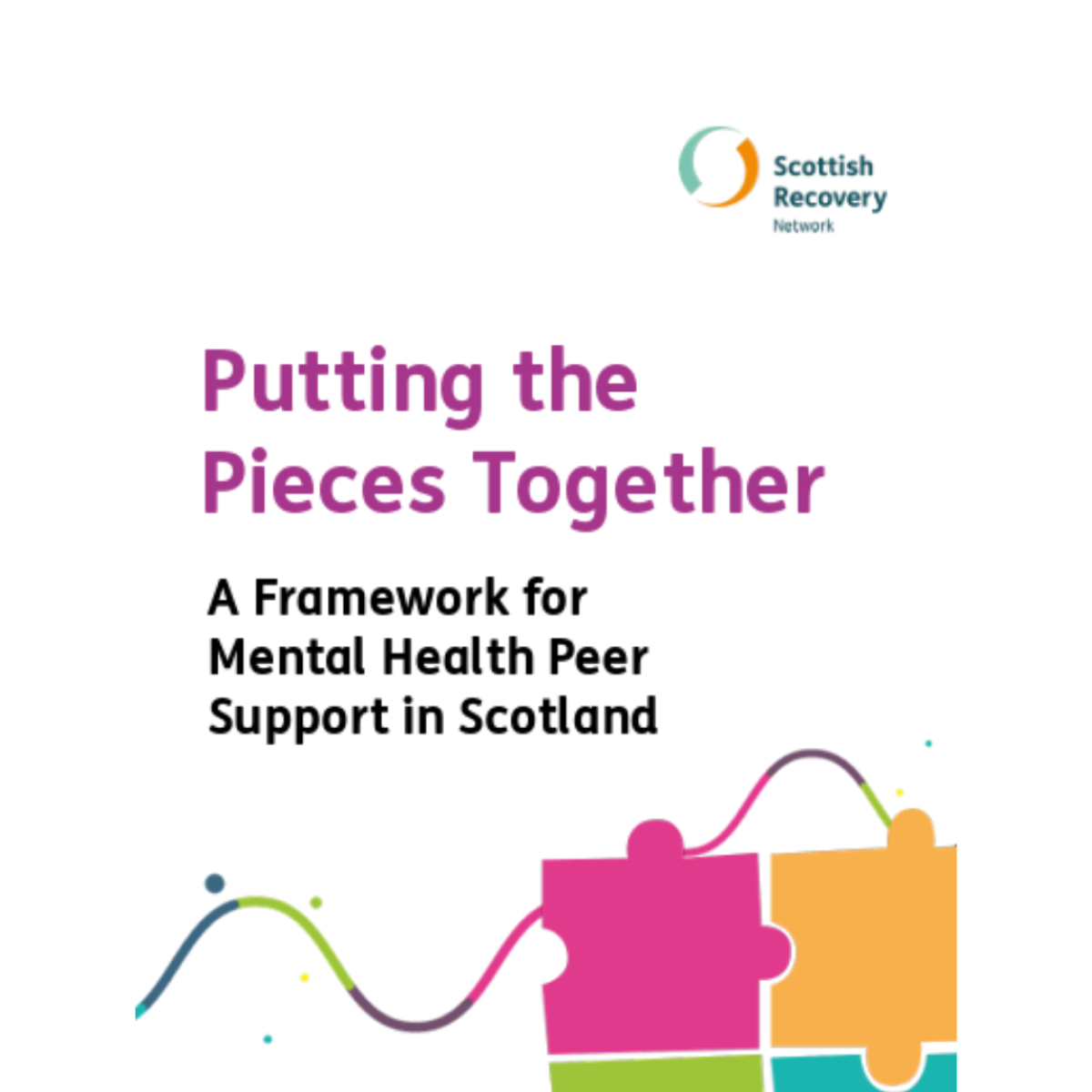
We are delighted to share that SWAN Scotland has contributed to the development of Putting the Pieces Together: A Framework for Mental Health Peer Support in Scotland, a new national resource led by the Scottish Recovery Network.
The framework has been developed collaboratively by organisations, practitioners and people with lived experience from across Scotland. It is designed for anyone introducing, developing, delivering or supporting peer support roles and services, including policymakers, commissioners and peer support practitioners. Its aim is to strengthen understanding of peer support, promote shared values and support high-quality, values-led practice across Scotland.
As an autistic-led organisation, we were pleased to contribute our experience of developing and delivering autistic peer support, alongside many other organisations with expertise across the peer support sector.
Peer support is central to everything we do. Whether through our peer groups, wellbeing walks, courses or one-to-one support, our work is built on the belief that shared lived experience can create understanding, connection and hope in ways that cannot always be achieved through traditional services alone.
Many of the values reflected throughout the framework resonate strongly with our own approach to peer support. Mutuality, trust, authenticity, respect, shared learning and recognising the expertise that comes from lived experience have always been fundamental to how we work.
Our experience also demonstrates that autistic peer support brings something distinctive. While it shares the same core values as other forms of peer support, it is informed by autistic ways of understanding ourselves, our wellbeing and our relationships with others.
For many autistic people, support is not simply about talking to someone who has had similar experiences. It is about being in a space where communication differences are understood rather than judged, sensory and access needs are recognised as ordinary rather than exceptional, and where there is no expectation to mask or perform neurotypical ways of interacting.
Autistic peer support is grounded in neuro-affirming practice. Rather than viewing autism as something to be overcome, it creates opportunities for people to better understand themselves, develop a positive autistic identity and build confidence in ways of living that are authentic to them. It also reflects growing understanding of concepts such as the Double Empathy Problem, recognising that misunderstandings between autistic and non-autistic people arise from differences in communication and perspective, rather than deficits within autistic people alone.
This means that peer support can offer far more than emotional support. It can provide validation, reduce the impact of stigma and internalised ableism, foster self-acceptance, and create opportunities for autistic people to learn from one another's experiences, strategies and strengths. For many people, it is the first time they experience relationships where they feel genuinely understood without needing to continually explain themselves.
We were pleased to bring this perspective to the development of the framework and to contribute alongside colleagues from across Scotland. Collaboration across the peer support sector helps build a shared understanding of what good peer support looks like while recognising that different communities may put these shared values into practice in different ways.
We hope this framework will support organisations, commissioners and policymakers to continue recognising the value of lived experience and investing in high-quality, values-led peer support across Scotland, including the vital contribution of autistic-led peer support.
We would like to thank the Scottish Recovery Network for bringing together such a diverse group of organisations to co-produce this important resource and for creating the opportunity to learn from one another throughout the process.
We hope this framework will help organisations, commissioners and policymakers continue to recognise the value of lived experience and invest in high-quality, values-led peer support across Scotland, including the vital role of autistic-led peer support.
You can read Putting the Pieces Together: A Framework for Mental Health Peer Support in Scotland on the Scottish Recovery Network website:
https://scottishrecovery.net/putting-the-pieces-together-a-framework-for-mental-health-peer-support-in-scotland/